
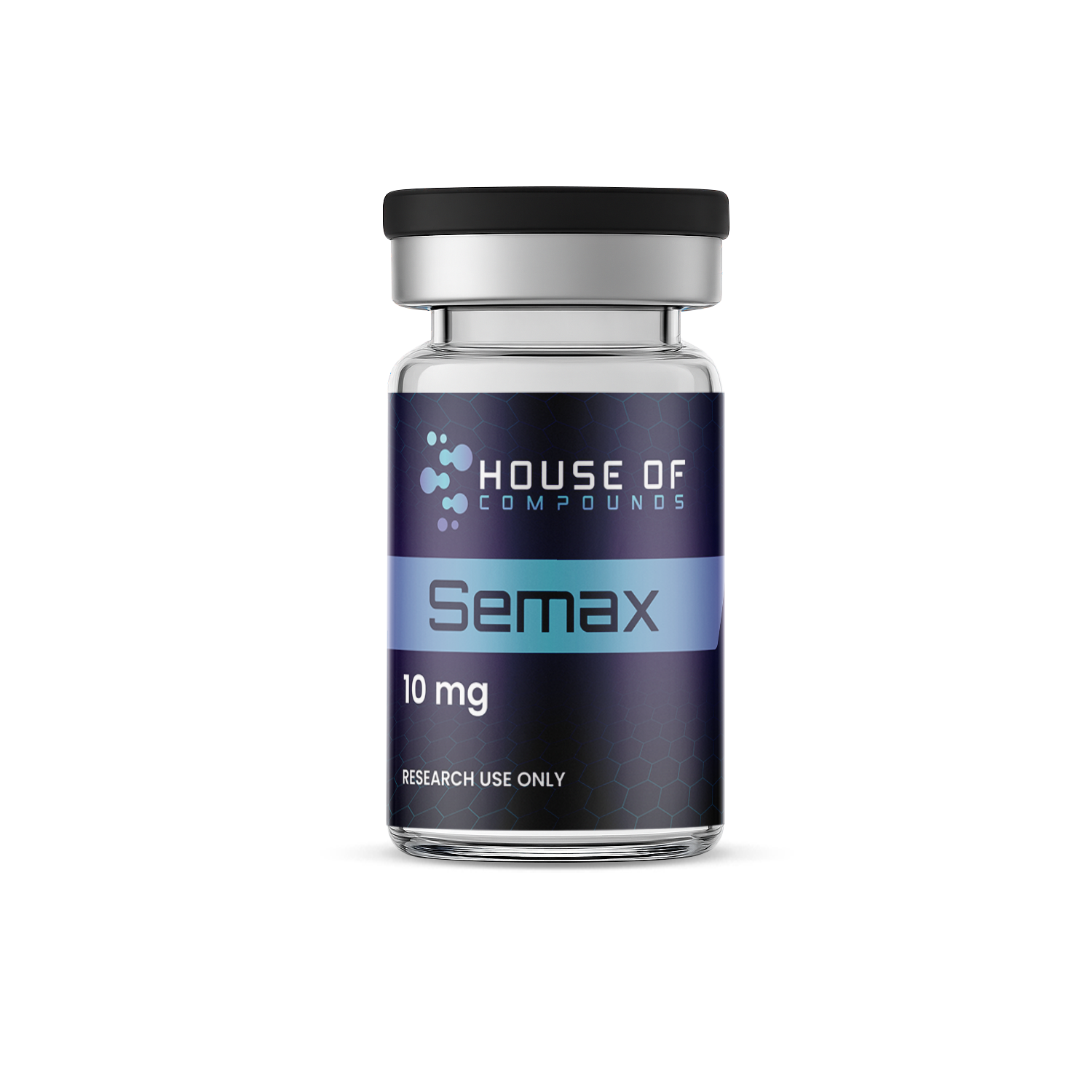
Semax
$75.00
Description
A single-component research material supplied for controlled research environments. Suitable for studies involving peptide characterization and method development in model systems.
Composition
-
Semax: 10 mg
- Appearance: lyophilized powder in a sealed research vial
Research Focus (non-clinical)
-
Peptide identity and purity assessment
-
Assay development and calibration for quantitative analysis
-
Chromatographic method optimization for impurity profiling and peak resolution
-
Stability characterization of a lyophilized peptide under laboratory storage conditions
Documentation
-
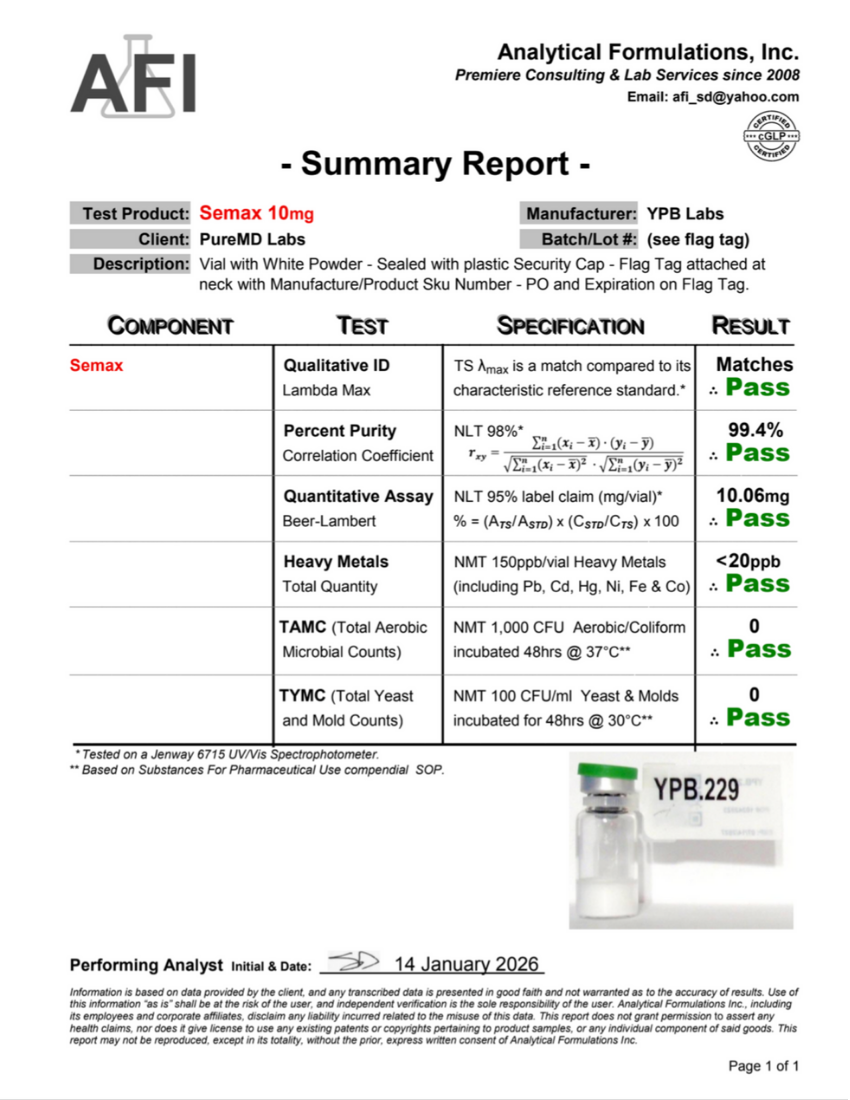
Lot-specific COA available
-
Batch and lot traceability
Important Notice
-
For research use only
-
Not for human consumption
-
Not intended to diagnose, treat, cure, or prevent any disease
Quality & Manufacturing
-
Lot-specific COA
-
Lyophilized for transit stability; batch traceable
-
Tamper-evident seal; lot & test date on each vial
-
No MOQ for online orders
-
Bulk orders for physical locations start at 25-unit minimum
Additional information
| Weight | 0.2 lbs |
|---|
Storage Instructions
Certificate of Analysis
Related products
-
-
SS-31
Price range: $80.00 through $140.00Select options This product has multiple variants. The options may be chosen on the product page -
Wolverine Blend – BPC-157 (5mg) / TB500 (5mg) (Globally Sourced)
Price range: $100.00 through $120.00Select options This product has multiple variants. The options may be chosen on the product page
Research Use Only
The following peer-reviewed publications reference compounds for laboratory and in vitro research purposes only. Not for human or animal use. Not intended to diagnose, treat, cure, or prevent any disease or condition.
Published Scientific Research
Peer-reviewed laboratory studies investigating research peptides
Semax peptide targets the μ opioid receptor gene Oprm1 to promote deubiquitination and functional recovery after spinal cord injury in female mice.
Given the key roles of LMP and ubiquitination in SCI pathophysiology, this study investigated how Semax could modulate these pathways to affect functional recovery following SCI. Network pharmacology and docking revealed the μ-opioid receptor as a Semax target.
View Full StudySemax, a Copper Chelator Peptide, Decreases the Cu(II)-Catalyzed ROS Production and Cytotoxicity of aβ by Metal Ion Stripping and Redox Silencing.
Alzheimer's disease (AD) is the most common neurodegenerative disorder associated with cognitive decline and loss of memory. It is postulated that the generation of reactive oxygen species (ROS) in Fenton-like reaction connected with Cu(II)/Cu(I) redox cycling of the Cu(II)-aβ complex can play a key role in the molecular mechanism of neurotoxicity in AD.
View Full StudySynthetic corticotropins and the GABA-receptor system: Direct and delayed effects.
The molecular mechanism underlying the biological activity of such peptides is partly based on allosteric modulation of various receptors. We analyzed the ability of some biologically active synthetic corticotropins (ACTH(4-7)PGP, ACTH(6-9)PGP, ACTH(7-10)PGP), and glyproline PGPL to affect the GABA-receptor system of rat brain.
View Full StudyBrain Protein Expression Profile Confirms the Protective Effect of the ACTHPGP Peptide (Semax) in a Rat Model of Cerebral Ischemia-Reperfusion.
Previously, studies of the molecular mechanisms underlying the actions of Semax using models of cerebral ischemia in rats showed that the peptide enhanced the transcription of neurotrophins and their receptors and modulated the expression of genes involved in the immune response. At 24 h after tMCAO, we observed the upregulation of active CREB in subcortical structures, including the focus of the ischemic damage; downregulation of MMP-9 and c-Fos in the adjacent frontoparietal cortex; and downregulation of active JNK in both tissues under the action of Semax.
View Full StudyNovel Insights into the Protective Properties of ACTHPGP (Semax) Peptide at the Transcriptome Level Following Cerebral Ischaemia-Reperfusion in Rats.
However, its molecular mechanisms of action within the brain are not yet fully understood. Therefore, the neuroprotective action of Semax may be associated with a compensation of mRNA expression patterns that are disrupted during ischaemia-reperfusion conditions.
View Full StudySemax, an analog of ACTH, regulates expression of immune response genes during ischemic brain injury in rats.
To build the effective strategies for stroke treatment it is necessary to understand the neuroprotective mechanisms that are able to prevent the ischemic injury. However, the molecular mechanisms underlying its neuroprotection and participation of PGP in them are still needed to be clarified.
View Full Study