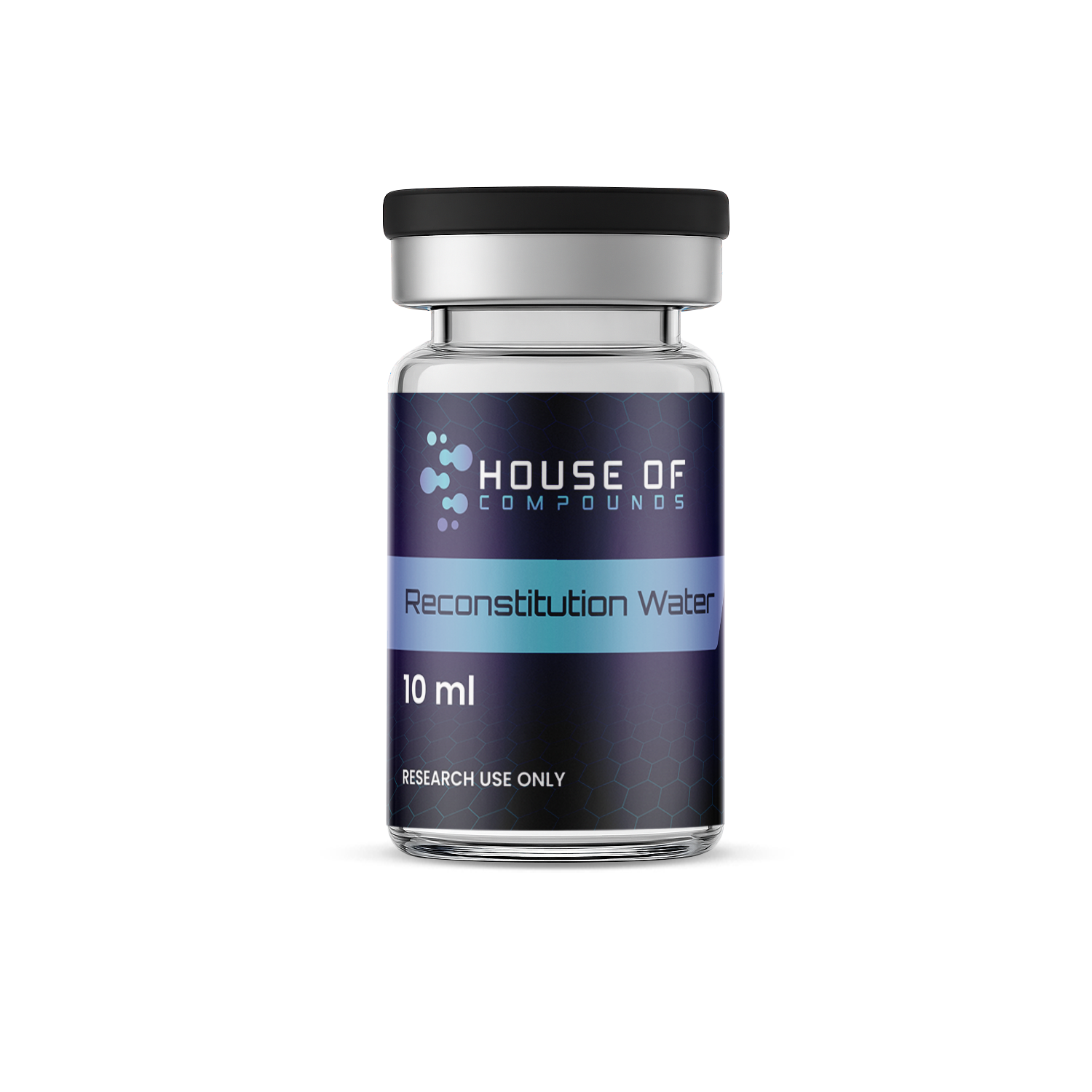
Reconstitution Water

$60.00

SKU: YPB.226 Category:

Additional information

Weight 0.2 lbs
Research Use Only

The following peer-reviewed publications reference compounds for laboratory and in vitro research purposes only. Not for human or animal use. Not intended to diagnose, treat, cure, or prevent any disease or condition.

PubMed — Peer-Reviewed Research

Published Scientific Research

Peer-reviewed laboratory studies investigating research peptides

Molecular Analysis PubMed

An antimicrobial daptide from human skin commensal Staphylococcus hominis protects against skin pathogens.

Nature communications 2025

The molecular mechanisms by which these natural products mediate interbacterial competition are not fully understood. Membrane permeability and voltage-clamp lipid bilayer experiments support a mechanism by which the daptide rapidly dissipates the transmembrane potential by forming peptidic channels.

View Full Study
Mechanism Study PubMed

Protease-Induced Excitation of Dorsal Root Ganglion Neurons in Response to Acute Perturbation of the Gut Microbiota Is Associated With Visceral and Somatic Hypersensitivity.

Cellular and molecular gastroenterology and hepatology 2024

BACKGROUND & AIMS: Abdominal pain is a major symptom of diseases that are associated with microbial dysbiosis, including irritable bowel syndrome and inflammatory bowel disease. However, the mechanisms underlying microbial modulation of pain remain elusive.

View Full Study
Laboratory Research PubMed

Optimizing lipopeptide bioactivity: The impact of non-ionic surfactant dressing.

Journal of pharmaceutical analysis 2024

The solubility and homogeneity of the lipopeptides were significantly increased, and dynamic light scattering (DLS) measurements showed the formation of small particles of around 20 nm, which were well reproducible and storable. The pL1 lipopeptide, formulated with the selected poloxamers, exhibited enhanced antibacterial activity with significantly reduced haemolytic side effects.

View Full Study
Molecular Analysis PubMed

Protein ingredient quality of infant formulas impacts their structure and kinetics of proteolysis under in vitro dynamic digestion.

Food research international (Ottawa, Ont.) 2023

Infant formula (IF) is a complex matrix requiring numerous ingredients and processing steps. The objective was to understand how the quality of protein ingredients impacts IF structure and, in turn, their kinetics of digestion. Four powdered IFs (A/B/C/D), based on commercial whey protein (WP) ingredients, with different protein denaturation levels and composition (A/B/C), and on caseins with different supramolecular organisations (C/D), were produced at a semi-industrial level after homogenizat

View Full Study
Molecular Analysis PubMed

In vitro reconstitution of kallikrein-kinin system and progress curve analysis.

Bioscience reports 2022

Human kallikrein-kinin system (KKS) is a proteolytic cascade with two serine-protease zymogen couples (Factor XII and prekallikrein (PK) and their activated forms, FXIIa, PKa, respectively), releasing bradykinin by cleavage of native high-molecular-weight kininogen (nHK) into cleaved HK. For KKS investigation in human plasma, this cascade is usually triggered on ice eventually by mixing with purified proteins. It has been established that purified FXIIa, PK, and nHK required a fixed order and ti

View Full Study
Molecular Analysis PubMed

Long-term potentiation reconstituted with an artificial TARP/PSD-95 complex.

Cell reports 2022

The critical role of AMPA receptor (AMPAR) trafficking in long-term potentiation (LTP) of excitatory synaptic transmission is now well established, but the underlying molecular mechanism is still uncertain. To determine if such interaction is a core minimal component of the AMPAR trafficking and LTP mechanism, we engineered artificial binding partners, which individually were biochemically and functionally dead but which, when expressed together, rescue binding and both basal synaptic transmission and LTP.

View Full Study

Frequently Asked Questions

Essential information about our research-grade peptides and quality standards.

Peptides are short chains of amino acids linked by peptide bonds, typically consisting of 2-50 amino acids. They serve as the building blocks of proteins and play crucial roles in biological processes.

Research peptides are synthesized versions of naturally occurring peptides, manufactured to precise specifications for use in scientific studies.

Key characteristics: High purity (≥99%), lyophilized form for stability, accompanied by Certificates of Analysis (COA), and manufactured under strict quality control protocols.

Peptide purity refers to the percentage of the target peptide present in a sample, measured via High-Performance Liquid Chromatography (HPLC).

Our Standard: All our research peptides maintain ≥99% purity, verified by third-party laboratory testing and documented in our Certificates of Analysis.

Higher purity is critical for research because impurities can interfere with experimental results and compromise the reproducibility of studies.

All products are supplied in lyophilized powder form within sterile, sealed vials. This format provides:

  • Maximum stability: Extended shelf life compared to liquid solutions
  • Precise measurement: Researchers can work with desired quantities
  • Contamination protection: Sealed vials prevent environmental exposure
  • Shipping durability: Powder form is more stable during transit

Lyophilized peptides:

  • Store at -20°C for long-term storage (up to 24 months)
  • Store at 2-8°C (refrigerated) for short-term storage (up to 3 months)
  • Keep away from light, moisture, and repeated temperature fluctuations

We supply research-grade peptides to:

  • Academic and university research laboratories
  • Pharmaceutical and biotechnology companies
  • Independent research institutions
  • Licensed professionals conducting legitimate scientific research

We maintain rigorous quality control through a multi-step verification process:

  • HPLC Analysis: Every batch tested to verify ≥99% purity
  • Mass Spectrometry: Molecular weight confirmation for peptide identity
  • Third-Party Testing: Independent laboratory verification
  • Sterility Protocols: Aseptic handling and packaging procedures
  • Batch Documentation: Complete traceability from synthesis to delivery

"Research Use Only" (RUO) is a classification indicating that a product is intended exclusively for laboratory research and experimental investigation.

All orders are shipped with research-grade handling protocols:

  • Packaging: Insulated containers with cold packs when required
  • Carriers: USPS Priority Mail
  • Processing: Orders placed before 12 PM EST ship same business day
  • Tracking: Full tracking information provided via email

We stand behind every product:

  • Quality guarantee: Full replacement or refund if products don't meet stated specifications
  • Shipping issues: Free replacement for damaged or lost shipments
  • Unopened returns: Accepted within 30 days for store credit
You are unable to view this website.

⚠️ Research Use Only — Legal Acknowledgment

All products on this website are sold strictly for in vitro research and laboratory use only.

  • Not for human or veterinary use, consumption, or application
  • Not FDA-approved to diagnose, treat, cure, or prevent any disease
  • Buyer assumes full responsibility for legal compliance in their jurisdiction

By clicking "Accept," you confirm:

  • You are at least 21 years of age
  • You are a qualified researcher or laboratory professional
  • You understand these products are for research purposes only