
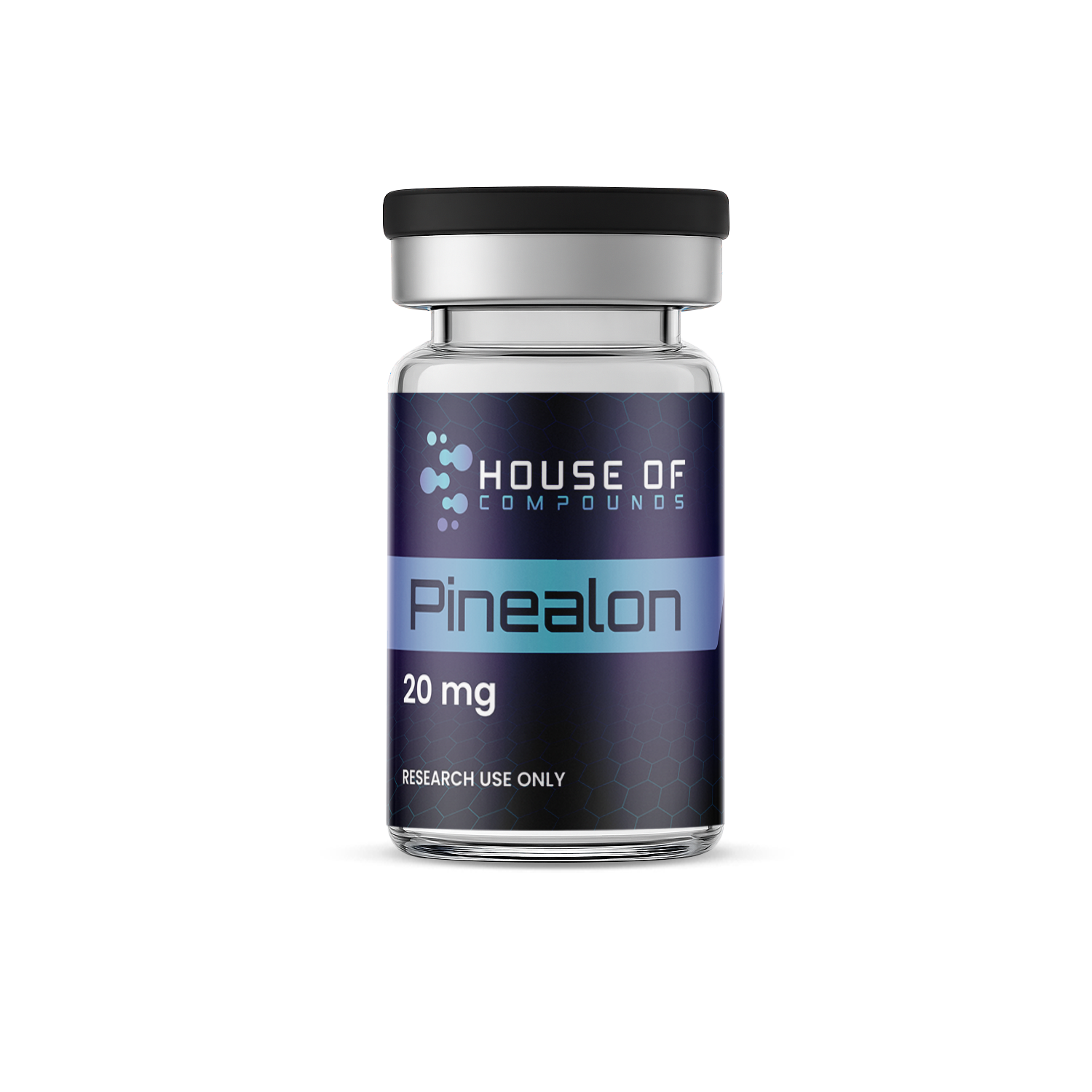
Pinealon (20mg)
$90.00
Description
A single-component research material supplied for controlled research environments. Pinealon (20 mg) is a synthetic short peptide sequence studied for its potential role in neuroendocrine regulation, cognitive function research, and epigenetic pathway exploration in model systems.
Composition
• Pinealon
• Appearance: Lyophilized powder in a sealed research vial
Research Focus (non-clinical)
• Peptide identity and purity assessment via HPLC/LC-MS
• Studies on neuropeptide signaling and gene expression in neuronal cell culture models
• Exploration of Pinealon’s effect on oxidative stress response in laboratory assays
• Stability and solubility profiling of Pinealon under laboratory storage conditions
For qualified research professionals and institutional laboratories. Not for human use.
Documentation & Quality Assurance
Each lot is sourced through our verified global supply chain with emphasis on traceability and quality control. We work diligently to obtain and maintain third-party analytical reports (HPLC/LC-MS) and Certificates of Analysis for each batch, as part of our ongoing quality process. These documents are reviewed internally and displayed as they become available. Independent third-party testing is also performed on select lots to confirm identity, purity, and alignment with our internal specifications.
Important Notice
This product is intended for laboratory research use only. It is not intended for human or veterinary use, and must not be used for diagnostic, therapeutic, or clinical purposes.
This material is not a drug, medical device, or dietary supplement, and has not been evaluated by the U.S. Food and Drug Administration.
Quality & Manufacturing
All materials are sourced from carefully vetted domestic and international manufacturing partners who follow quality systems consistent with ISO and cGMP principles. Each supplier is reviewed for reliability, documentation integrity, and transparency in testing.
We require a verified purity of 99% or higher and perform independent third-party spot testing to confirm that select lots meet our internal standards for identity, purity, and composition. Where available, endotoxin testing results are included on Certificates of Analysis to verify laboratory purity; their inclusion is for research quality assessment only and does not imply suitability for human or veterinary use.
All research materials are sealed for integrity and packaged for stability during storage and transport from manufacturing through final delivery.
Additional information
| Weight | 0.2 lbs |
|---|
Storage Instructions
All our research peptides are manufactured using a lyophilization (freeze-drying) process. This method is designed to maintain product integrity and allows vials to remain stable during shipping for approximately 3–4 months.
Once a vial is reconstituted with bacteriostatic water, it should be stored in the refrigerator to help maintain stability. Under these conditions, reconstituted material is generally considered stable for up to 30 days.
Lyophilization is a dehydration technique in which compounds are frozen and then exposed to low pressure. This causes the water in the vial to sublimate directly from solid to gas, leaving behind a stable, crystalline white structure. This powder can be kept at room temperature until reconstitution.
Upon receipt, products should be stored away from heat and light. For short-term use, refrigeration at approximately 4°C (39°F) is suitable. For long-term storage (several months to years), vials may be placed in a freezer at approximately -80°C (-112°F). Freezing is the preferred method for preserving product stability over extended periods.
⚠️ Important Notice: These products are intended for research use only. Not for human consumption.
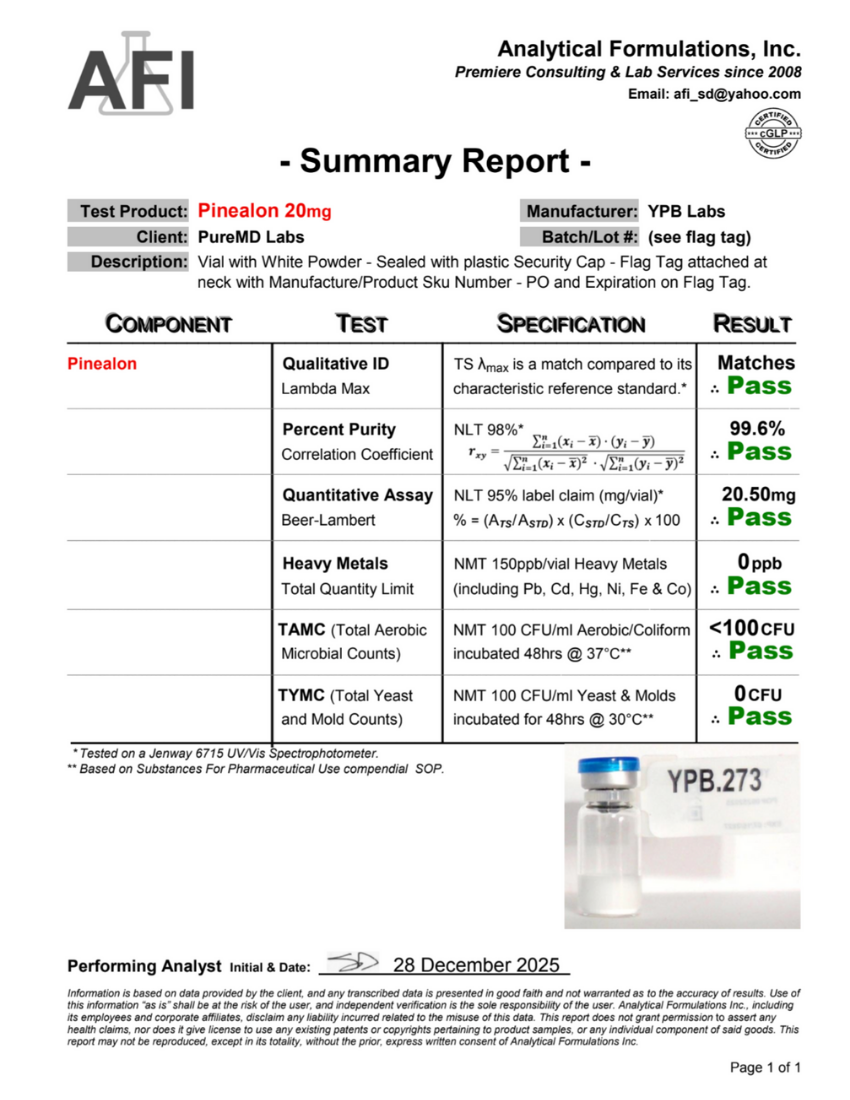
Certificate of Analysis
Related products
Research Use Only
The following peer-reviewed publications reference compounds for laboratory and in vitro research purposes only. Not for human or animal use. Not intended to diagnose, treat, cure, or prevent any disease or condition.
Published Scientific Research
Peer-reviewed laboratory studies investigating research peptides
Peptides: Emerging Candidates for the Prevention and Treatment of Skin Senescence: A Review.
Based on their mechanism of action, they can be classified into signal peptides, carrier peptides, neurotransmitter inhibitor peptides, and enzyme inhibitor peptides. Increasing peptide bioavailability and stability for enhanced delivery to the desired site of action and visible effects have become central points for the latest research due to their promising features.
View Full StudyAttenuation of fibroblast activation and fibrosis by adropin in systemic sclerosis.
Restoration of adropin signaling by therapeutic application of bioactive adropin peptides in turn inhibited TGFβ-induced fibroblast activation and fibrotic tissue remodeling in primary human dermal fibroblasts, three-dimensional full-thickness skin equivalents, mouse models of bleomycin-induced pulmonary fibrosis and sclerodermatous chronic graft-versus-host-disease (sclGvHD), and precision-cut human skin slices. Knockdown of , an adropin receptor, abrogated the antifibrotic effects of adropin in fibroblasts.
View Full StudyRetinal Microenvironment-Protected Rhein-GFFYE Nanofibers Attenuate Retinal Ischemia-Reperfusion Injury via Inhibiting Oxidative Stress and Regulating Microglial/Macrophage M1/M2 Polarization.
Further investigation of the treatment mechanism indicates that Rh-GFFYE activates the PI3K/AKT/mTOR signaling pathway to reduce oxidative stress and inhibits the NF-κB and STAT3 signaling pathways to affect inflammation and macrophage polarization.
View Full StudyOptimization of protein hydrolysis conditions and antioxidant activity of tetrapeptide Asp-Arg-Glu-Leu by elevating the Nrf2/Keap1-p38/PI3K-MafK signaling pathway.
Tetrapeptide Asp-Arg-Glu-Leu (DREL) was isolated from Jiuzao protein hydrolysates (JPHs) by alkaline proteinase (AP) and exhibited antioxidant activity in the HepG2 cell model in the previous study. Considering the limitation of in vitro assays, the AAPH-induced oxidative stress Sprague-Dawley (SD) rat model was selected to measure the antioxidant capacity of DREL in vivo.
View Full StudyEDR Peptide: Possible Mechanism of Gene Expression and Protein Synthesis Regulation Involved in the Pathogenesis of Alzheimer's Disease.
The tripeptide promotes the activation of the antioxidant enzyme synthesis in the culture of cerebellum neurons in rats. Thus, the EDR peptide can change the activity of the MAPK/ERK signaling pathway, the synthesis of proapoptotic proteins (caspase-3, p53), proteins of the antioxidant system (SOD2, GPX1), transcription factors PPARA, PPARG, serotonin, calmodulin.
View Full StudyRole of Mono- and Divalent Ions in Peptide Glu-Asp-Arg-DNA Interaction.
The interaction of the regulatory biologically active peptide Glu-Asp-Arg (EDR) with DNA is considered by spectral, NMR, viscosimetry, and molecular dynamics methods. It was shown that EDR can partly penetrate into the major groove of DNA and affect the base atoms, mainly the N7 and O6 of guanine. It was observed that Mg ions can promote DNA-EDR interaction due to their effective screening of the negatively charged phosphate groups of DNA. This action of Mg remains in salted solution as well.
View Full Study