
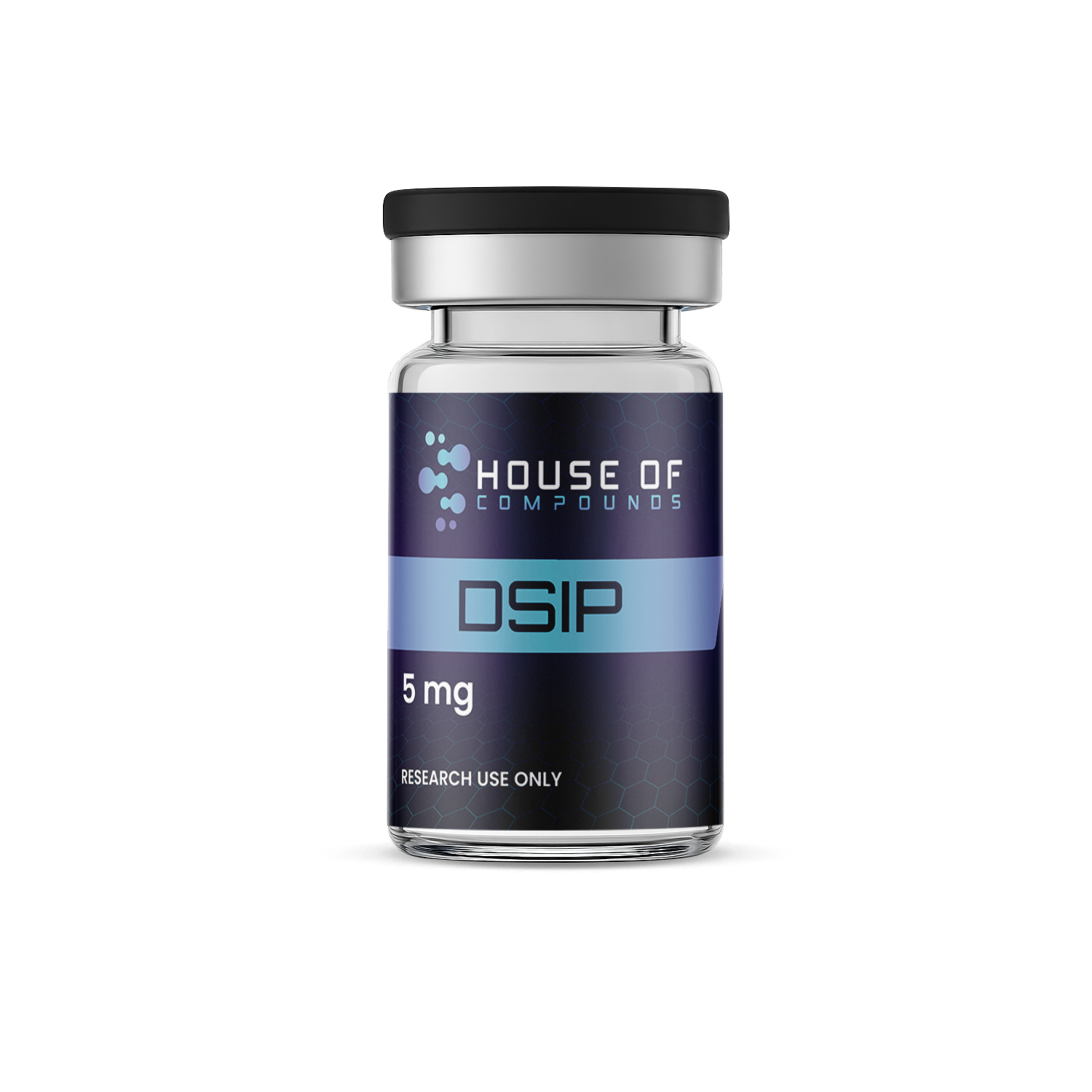
DSIP
Price range: $34.99 through $74.99
1 published certificate
Certificate information is temporarily unavailable.
Description
A single-component research material supplied for controlled research environments. Suitable for studies involving peptide characterization and method development in model systems.Not for human use.
Documentation & Quality Assurance
Each lot is sourced through our verified global supply chain with emphasis on traceability and quality control.These documents are reviewed internally and displayed as they become available. Independent third-party testing is also performed on select lots to confirm identity, purity, and alignment with our internal specifications.
Important Notice
This product is intended for laboratory research use only. It is not intended for human or veterinary use, and must not be used for diagnostic, therapeutic, or clinical purposes.
This material is not a drug, medical device, or dietary supplement, and has not been evaluated by the U.S. Food and Drug Administration.
Quality & Manufacturing
We work directly with the manufacturers. Each supplier is reviewed for reliability, documentation integrity, and transparency in testing.
We require a verified purity of 99% or higher and perform independent third-party spot testing to confirm that select lots meet our internal standards for identity, purity, and composition. Where available, endotoxin testing results are included on Certificates of Analysis to verify laboratory purity; their inclusion is for research quality assessment only and does not imply suitability for human or veterinary use.
All research materials are sealed for integrity and packaged for stability during storage and transport from manufacturing through final delivery.
Additional information
| Weight | 0.0625 lbs |
|---|---|
| Dosage | 5mg, 15mg |
Published Scientific Research
Explore the full library of peer-reviewed studies, clinical data, mechanism breakdowns, and molecular specifications for DSIP.
All research is sourced from PubMed-indexed journals for informational and educational purposes only. For Research Use Only (RUO). Not for human use.
View Full Research Library →Storage Instructions
All products from House of Compounds are manufactured using a lyophilization (freeze-drying) process. This method is designed to maintain product integrity and allows vials to remain stable during shipping for approximately 3–4 months.
Once a vial is reconstituted with bacteriostatic water, it should be stored in the refrigerator to help maintain stability. Under these conditions, reconstituted material is generally considered stable for up to 30 days.
Lyophilization is a dehydration technique in which compounds are frozen and then exposed to low pressure. This causes the water in the vial to sublimate directly from solid to gas, leaving behind a stable, crystalline white structure. This powder can be kept at room temperature until reconstitution.
Upon receipt, products should be stored away from heat and light. For short-term use, refrigeration at approximately 4°C (39°F) is suitable. For long-term storage (several months to years), vials may be placed in a freezer at approximately -80°C (-112°F). Freezing is the preferred method for preserving product stability over extended periods.
⚠️ Important Notice:
These products are intended for research use only. Not for human consumption.
Related products
-
Sale!
N-Acetyl Epitalon Amidate (5 mg)
Original price was: $79.99.$59.99Current price is: $59.99. -
Sale!
GLP-3 RT
Price range: $99.99 through $299.99Select options This product has multiple variants. The options may be chosen on the product page -
Sale!
2X Blend CJC-1295 Without DAC (5mg) / Ipamorelin (5mg)
Original price was: $89.99.$74.99Current price is: $74.99.
Research Use Only
The following peer-reviewed publications reference compounds for laboratory and in vitro research purposes only. Not for human or animal use. Not intended to diagnose, treat, cure, or prevent any disease or condition.
Published Scientific Research
Peer-reviewed laboratory studies investigating research peptides
[Sleep and anesthesia--Part 1, Recent findings in research].
We described how modern neuroscience has elucidated what is sleep and its implication, and also reviewed histological and current trends in search of sleep mechanism from view of neurocirculatory or hormonary basis studies. We conclude that anesthesia and sleep share some neuronal structure in their action and mechanism of anesthesia could be elucidated through sleep study.
View Full StudyDelta sleep-inducing peptide (DSIP): a still unresolved riddle.
However, the link between DSIP and sleep has never been further characterized, in part because of the lack of isolation of the DSIP gene, protein and possible related receptor.
View Full Study[Pharmacological efficacy of delta sleep-inducing peptide in experimental acute pancreatitis].
The development of experimental acute pancreatitis (EOP) in rats is accompanied by (i) intensification of the lipid peroxidation (LPO) process and the accumulation of malonic dialdehyde (MDA, an LPO product) in the tissues of pancreas, liver, and kidney and in the blood serum, (ii) destabilization of membranes and reduction of the osmotic resistance of erythrocytes (ORE), (iii) increase in the concentration of extracorpuscular hemoglobin (ECH) and medium-molecular-weight molecules (MWM) in the b
View Full StudyRegulation by GTPgammaS of protein carboxylmethyltransferase activity in kidney brush border membranes.
The increase in carboxyl methylation induced by guanosine 5',3-O-(thio)triphosphate (GTPgammaS) in brush border membranes from rat kidney cortex was studied, and the methyltransferase activities affected by this nucleotide analog were identified. The methyl ester groups induced by the addition of GTPgammaS to brush border membranes were unstable, with about 80% of them hydrolyzed following 1 h incubation at 37 degrees C.
View Full StudySolution structure of porcine delta sleep-inducing peptide immunoreactive peptide A homolog of the shortsighted gene product.
The 77-residue delta sleep-inducing peptide immunoreactive peptide (DIP) is a close homolog of the Drosophila melanogaster shortsighted gene product. Porcine DIP (pDIP) and a peptide containing a leucine zipper-related partial sequence of pDIP, pDIP(9-46), was synthesized and studied by circular dichroism and nuclear magnetic resonance spectroscopy in combination with molecular dynamics calculations. Ultracentrifugation, size exclusion chromatography, and model calculations indicated that pDIP f
View Full Study[Neurochemical nature of "congestive" excitation in brain structures during emotional stress].
In the author's opinion, emotional stress-induced congestive excitation is determined by disintegration of molecular chemical properties in the brain regions, by the altered sensitivity of brain neurons to neurotransmitters and neuropeptides.
View Full Study