
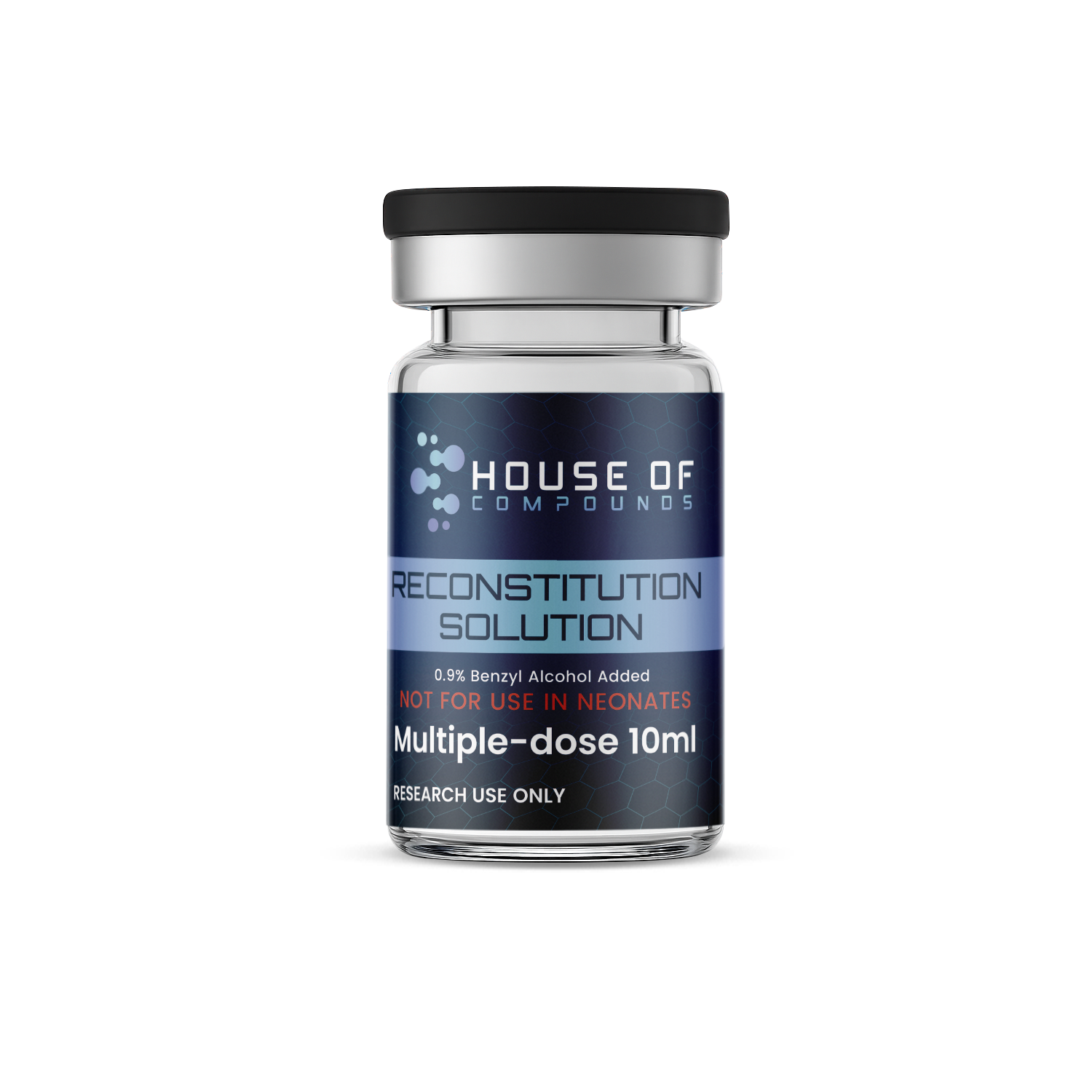
BAC Water
Price range: $24.99 through $34.99
Certificate information is temporarily unavailable.
Additional information
| Weight | 0.0625 lbs |
|---|---|
| Dosage | 10ml, 30ml |
Storage Instructions
All products from House of Compounds are manufactured using a lyophilization (freeze-drying) process. This method is designed to maintain product integrity and allows vials to remain stable during shipping for approximately 3–4 months.
Once a vial is reconstituted with bacteriostatic water, it should be stored in the refrigerator to help maintain stability. Under these conditions, reconstituted material is generally considered stable for up to 30 days.
Lyophilization is a dehydration technique in which compounds are frozen and then exposed to low pressure. This causes the water in the vial to sublimate directly from solid to gas, leaving behind a stable, crystalline white structure. This powder can be kept at room temperature until reconstitution.
Upon receipt, products should be stored away from heat and light. For short-term use, refrigeration at approximately 4°C (39°F) is suitable. For long-term storage (several months to years), vials may be placed in a freezer at approximately -80°C (-112°F). Freezing is the preferred method for preserving product stability over extended periods.
⚠️ Important Notice:
These products are intended for research use only. Not for human consumption.
Related products
-
Sale!
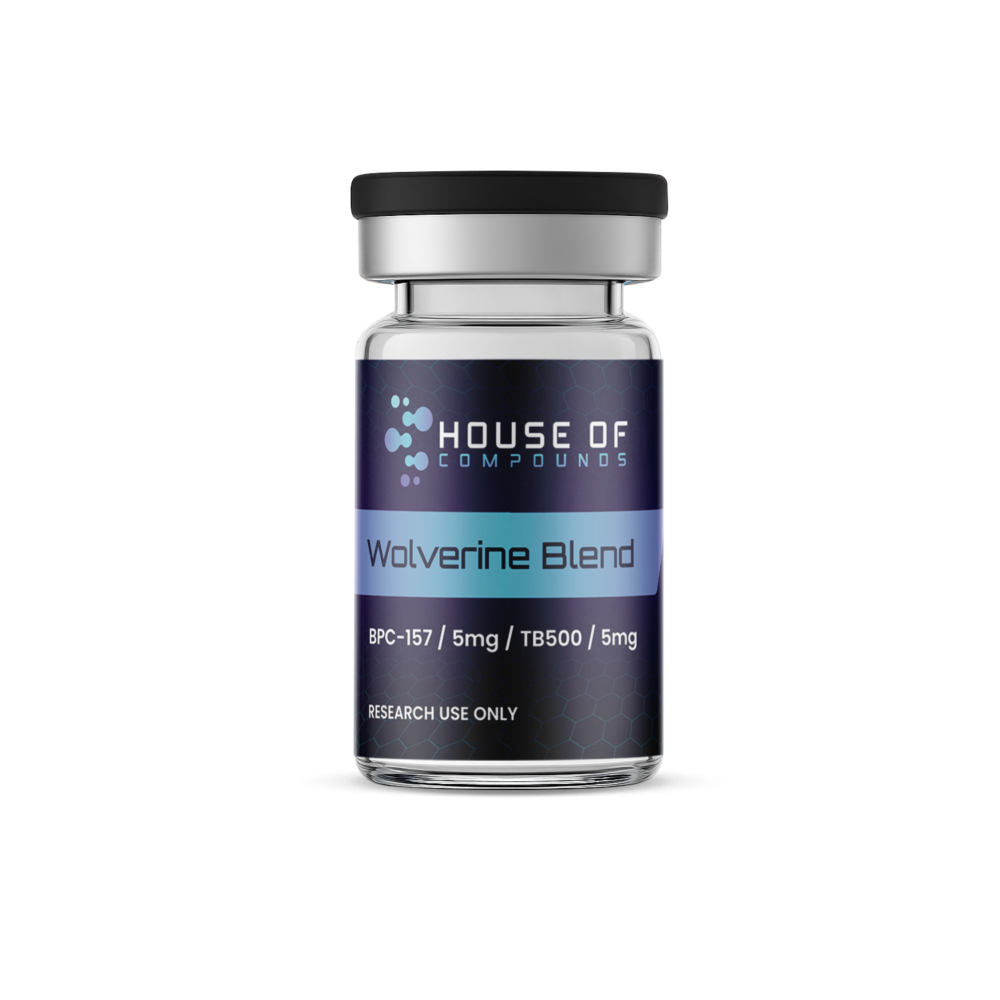
Wolverine Blend – BPC-157 (5mg) / TB500 (5mg)
Price range: $84.99 through $129.99Select options This product has multiple variants. The options may be chosen on the product page -
Sale!
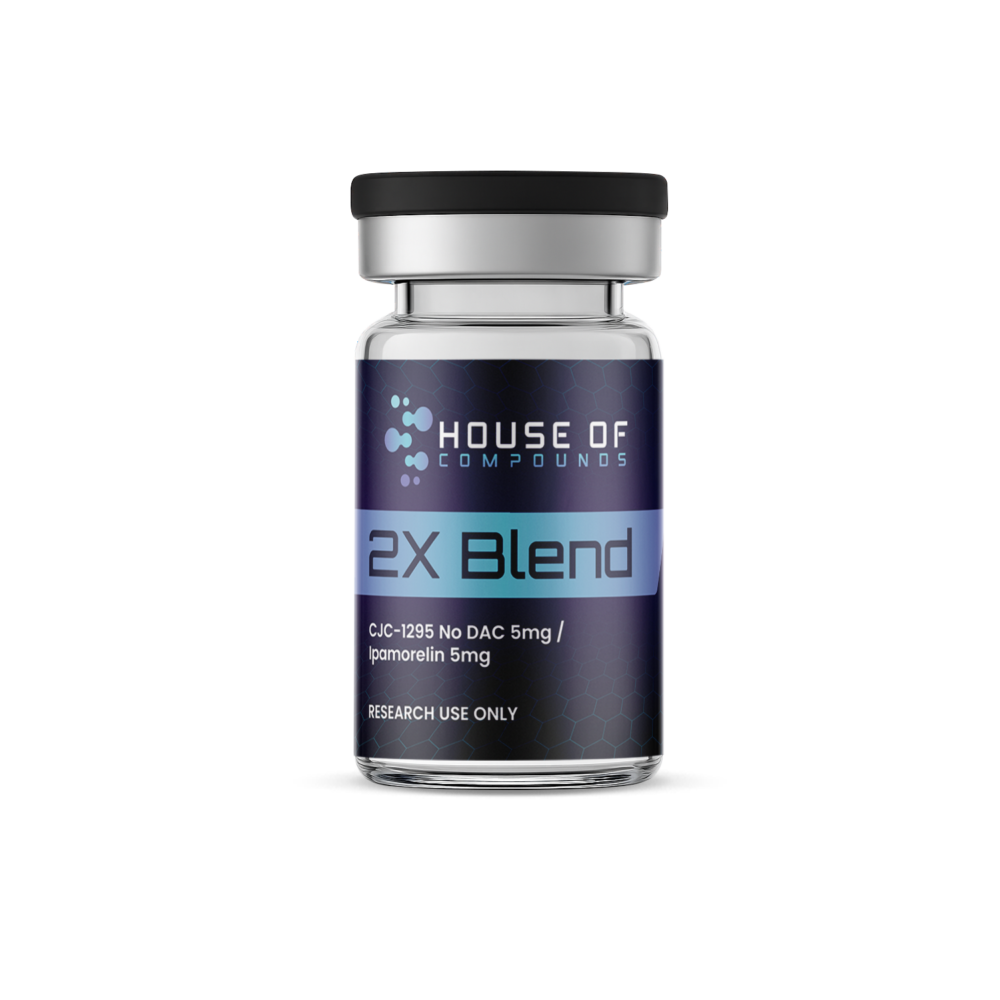
2X Blend CJC-1295 Without DAC (5mg) / Ipamorelin (5mg)
Original price was: $89.99.$74.99Current price is: $74.99. -
Sale!
Research Use Only
The following peer-reviewed publications reference compounds for laboratory and in vitro research purposes only. Not for human or animal use. Not intended to diagnose, treat, cure, or prevent any disease or condition.
Published Scientific Research
Peer-reviewed laboratory studies investigating research peptides
Decoding the Heart Failure Peptidome.
BACKGROUND: Peptides such as angiotensin II and brain natriuretic peptide are pivotal in diagnosing and treating heart failure (HF). However, unbiased systematic studies of the peptidome in patients with HF are lacking. Deciphering the plasma peptidome might significantly improve the diagnosis, prognostication, and treatment of patients with HF. METHODS: To systematically explore the low molecular peptidome, we conducted a cross-sectional mass spectrometry analysis from 486 patients with HF and
View Full StudyBioactive Glycyrrhizic Acid Ionic Liquid Self-Assembled Nanomicelles for Enhanced Transdermal Delivery of Anti-Photoaging Signal Peptides.
The components ratios and inherent forming mechanisms of GA-OMT (GAO) are optimized by molecular dynamics simulations and density functional theory calculations. The permeation and subcutaneous retention of PAL-4 are significantly promoted with 10wt.% GAO-SM.
View Full StudyPeptides: Emerging Candidates for the Prevention and Treatment of Skin Senescence: A Review.
Based on their mechanism of action, they can be classified into signal peptides, carrier peptides, neurotransmitter inhibitor peptides, and enzyme inhibitor peptides. Increasing peptide bioavailability and stability for enhanced delivery to the desired site of action and visible effects have become central points for the latest research due to their promising features.
View Full StudyReceptor-independent regulation of Gα13 by alpha-1-antitrypsin C-terminal peptides.
The C-terminal peptides of AAT are found in various tissues and have been proposed as putative bioactive peptides with multiple functions, but its mechanism of action remains unclear. A molecular dynamics simulation for the Gα13・GDP-mAAT-C complex model showed that binding of mAAT-C to the region surrounded by switch regions of Gα13 stabilizes the flexible switch II and III regions, thereby maintaining their active conformation.
View Full StudyPhytosulfokine peptides, their receptors, and functions.
In this review, we summarize recent advances in PSK biosynthesis, signaling, and function. PSK signaling is mediated by plasma membrane-localized receptors PSKRs that belong to the leucine-rich repeat receptor-like kinase family.
View Full StudyImproved GPCR ligands from nanobody tethering.
Here we develop a new type of conjugate that consists of a nanobody and a peptidic ligand for a G protein-coupled receptor (GPCR), fused via their C-termini. We address activation of parathyroid hormone receptor-1 (PTHR1) and improve the signaling activity and specificity of otherwise poorly active N-terminal peptide fragments of PTH by conjugating them to nanobodies (VHHs) that recognize PTHR1.
View Full Study