
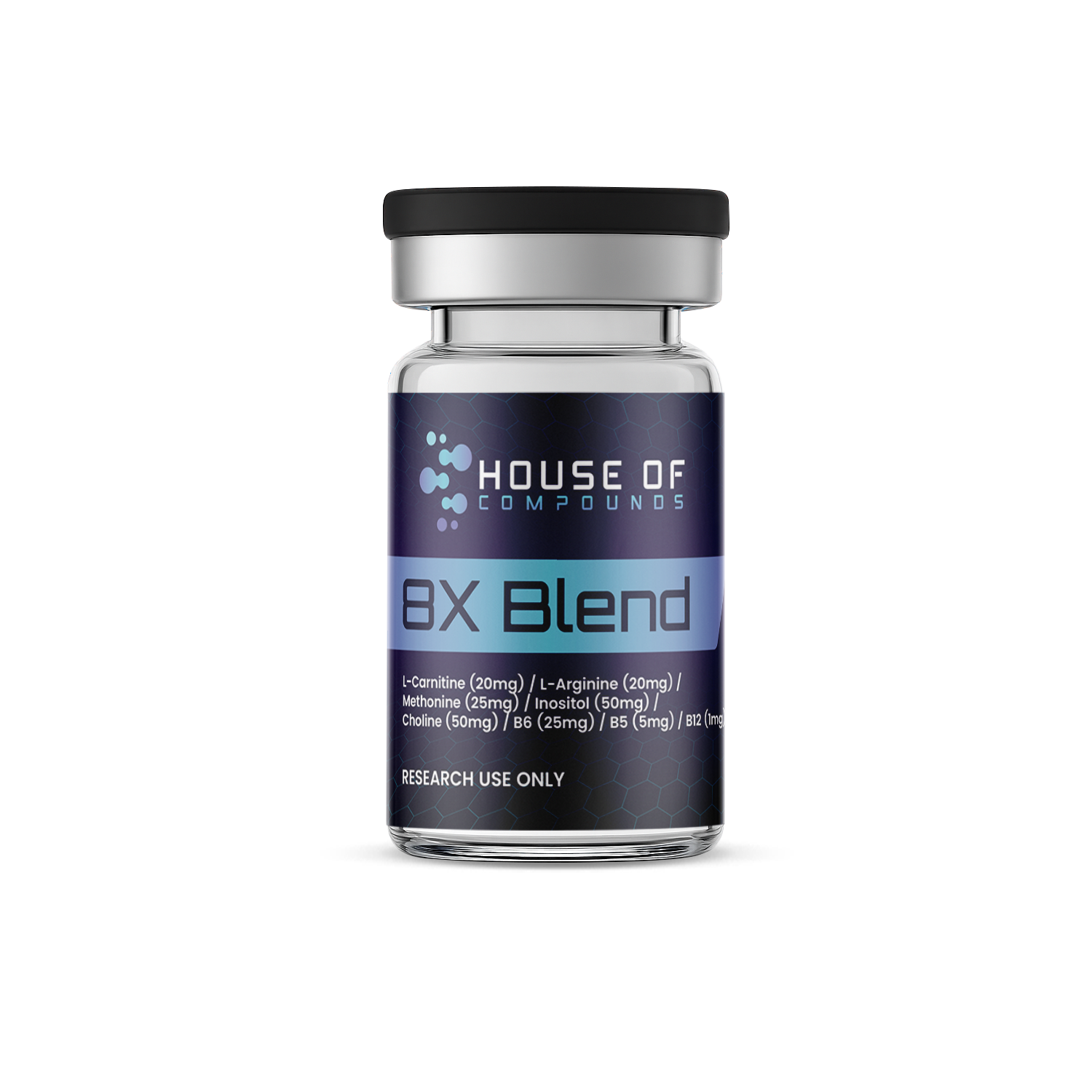
8X Blend Lipo-C
$80.00
Description
A multi-component research material supplied for controlled research environments. This 8X blend contains a synergistic combination of amino acids, vitamins, and cofactors designed for research into metabolic function, methylation pathways, and nutrient interaction studies in controlled laboratory settings.
Composition
• L-Carnitine
• L-Arginine
• Methionine
• Inositol
• Choline
• Vitamin B6 (Pyridoxine)
• Vitamin B5 (Dexpanthenol)
• Vitamin B12 (Methylcobalamin)
• Appearance: Sterile liquid solution in a sealed 10 mL research vial
Research Focus (non-clinical)
• Investigation of amino acid and vitamin cofactor roles in metabolic pathways
• Studies on lipid metabolism and methylation cycle regulation
• Development of analytical assays for multi-component solution characterization
• Stability, sterility, and pH profiling under laboratory storage conditions
For qualified research professionals and institutional laboratories. Not for human use.
Documentation & Quality Assurance
Each lot is sourced through our verified global supply chain with emphasis on traceability and quality control. We work diligently to obtain and maintain third-party analytical reports (HPLC/LC-MS) and Certificates of Analysis for each batch, as part of our ongoing quality process. These documents are reviewed internally and displayed as they become available. Independent third-party testing is also performed on select lots to confirm identity, purity, and alignment with our internal specifications.
Important Notice
This product is intended for laboratory research use only. It is not intended for human or veterinary use, and must not be used for diagnostic, therapeutic, or clinical purposes.
This material is not a drug, medical device, or dietary supplement, and has not been evaluated by the U.S. Food and Drug Administration.
Quality & Manufacturing
All materials are sourced from carefully vetted domestic and international manufacturing partners who follow quality systems consistent with ISO and cGMP principles. Each supplier is reviewed for reliability, documentation integrity, and transparency in testing.
We require a verified purity of 99% or higher and perform independent third-party spot testing to confirm that select lots meet our internal standards for identity, purity, and composition. Where available, endotoxin testing results are included on Certificates of Analysis to verify laboratory purity; their inclusion is for research quality assessment only and does not imply suitability for human or veterinary use.
All research materials are sealed for integrity and packaged for stability during storage and transport from manufacturing through final delivery.
Additional information
| Weight | 0.2 lbs |
|---|
Storage Instructions
All our research peptides are manufactured using a lyophilization (freeze-drying) process. This method is designed to maintain product integrity and allows vials to remain stable during shipping for approximately 3–4 months.
Once a vial is reconstituted with bacteriostatic water, it should be stored in the refrigerator to help maintain stability. Under these conditions, reconstituted material is generally considered stable for up to 30 days.
Lyophilization is a dehydration technique in which compounds are frozen and then exposed to low pressure. This causes the water in the vial to sublimate directly from solid to gas, leaving behind a stable, crystalline white structure. This powder can be kept at room temperature until reconstitution.
Upon receipt, products should be stored away from heat and light. For short-term use, refrigeration at approximately 4°C (39°F) is suitable. For long-term storage (several months to years), vials may be placed in a freezer at approximately -80°C (-112°F). Freezing is the preferred method for preserving product stability over extended periods.
⚠️ Important Notice: These products are intended for research use only. Not for human consumption.
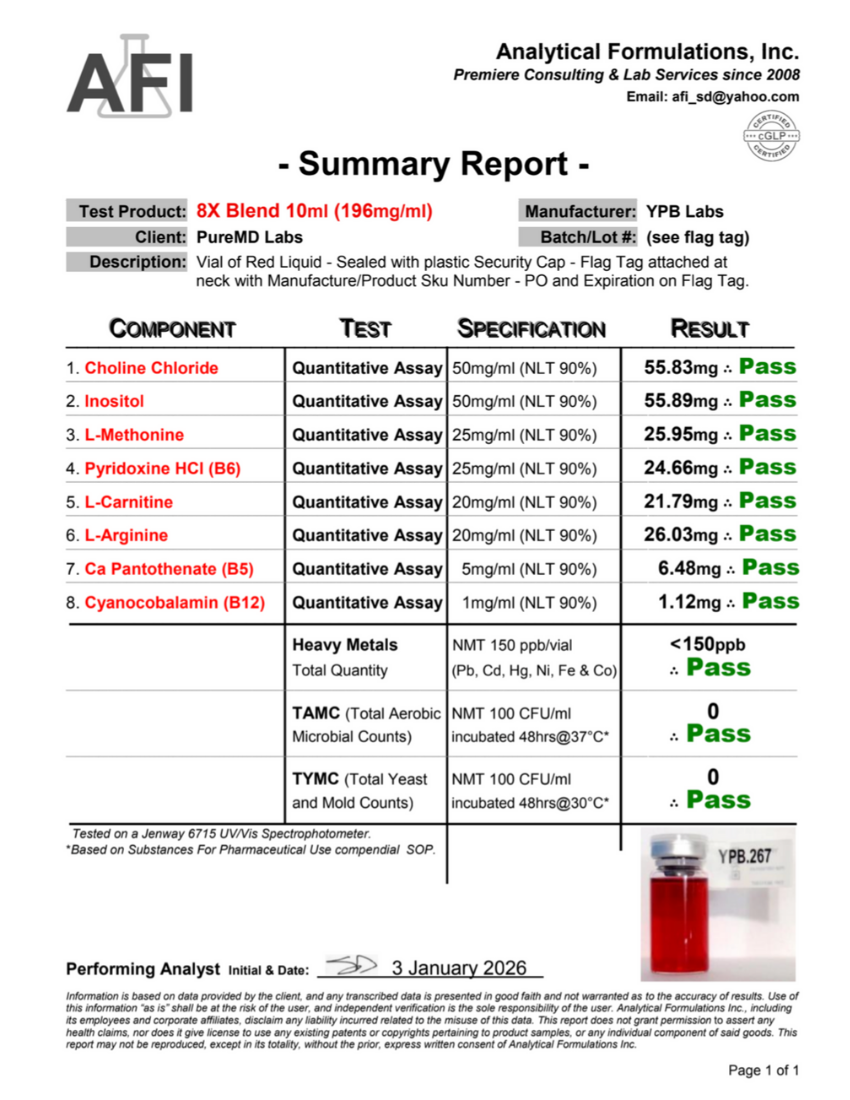
Certificate of Analysis
Related products
Research Use Only
The following peer-reviewed publications reference compounds for laboratory and in vitro research purposes only. Not for human or animal use. Not intended to diagnose, treat, cure, or prevent any disease or condition.
Published Scientific Research
Peer-reviewed laboratory studies investigating research peptides
Peptides: Emerging Candidates for the Prevention and Treatment of Skin Senescence: A Review.
Based on their mechanism of action, they can be classified into signal peptides, carrier peptides, neurotransmitter inhibitor peptides, and enzyme inhibitor peptides. Increasing peptide bioavailability and stability for enhanced delivery to the desired site of action and visible effects have become central points for the latest research due to their promising features.
View Full StudyRecent Advances in Peptide-Functionalized Hydrogels for Bone Tissue Engineering.
Efficient therapeutic approaches for bone regeneration are urgently required to address the significant challenges associated with the repair of large-scale or long-segment bone defects. Finally, critical biosafety considerations associated with PFHs and perspectives on developing intelligent PFHs are addressed.
View Full StudyAttenuation of fibroblast activation and fibrosis by adropin in systemic sclerosis.
Restoration of adropin signaling by therapeutic application of bioactive adropin peptides in turn inhibited TGFβ-induced fibroblast activation and fibrotic tissue remodeling in primary human dermal fibroblasts, three-dimensional full-thickness skin equivalents, mouse models of bleomycin-induced pulmonary fibrosis and sclerodermatous chronic graft-versus-host-disease (sclGvHD), and precision-cut human skin slices. Knockdown of , an adropin receptor, abrogated the antifibrotic effects of adropin in fibroblasts.
View Full StudyLeveraging coevolutionary insights and AI-based structural modeling to unravel receptor-peptide ligand-binding mechanisms.
Secreted signaling peptides are central regulators of growth, development, and stress responses, but specific steps in the evolution of these peptides and their receptors are not well understood. Also, the molecular mechanisms of peptide-receptor binding are only known for a few examples, primarily owing to the limited availability of protein structural determination capabilities to few laboratories worldwide.
View Full StudyThe functional role of m6A demethylase ALKBH5 in cardiomyocyte hypertrophy.
The m6A demethylase ALKBH5 is reported to be associated with cardiovascular diseases, whereas the functional role of ALKBH5 in cardiomyocyte hypertrophy remains confused. Subsequently, RNA immunoprecipitation (RIP)-qPCR, MeRIP-qPCR analysis and the dual-luciferase reporter assays were applied to elucidate the regulatory mechanism of ALKBH5 on cardiomyocyte hypertrophy.
View Full StudyRice bran active peptide (RBAP) inhibited macrophage differentiation to foam cell and atherosclerosis in mice via regulating cholesterol efflux.
Recent findings highlight the significance of cholesterol removal pathways in influencing atherosclerosis, yet the connection between cholesterol removal and regulation of macrophage inflammation remains poorly understood. RBAP could serve as an anti-inflammatory agent; however, its role in atherosclerosis and the mechanism behind it are still not well understood.
View Full Study